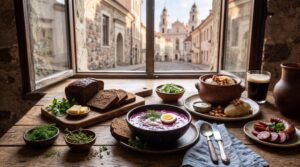
The Medieval Flavors of Vilnius: A Culinary Journey Through Time
 nikita.salov@seowriting.ai
The Medieval Flavors of Vilnius: A Culinary Journey Through Time
To walk through the winding, cobblestone streets of Vilnius today is to catch echoes of a grand, formidable past. Long before the Baroque spires defined its skyline, Vilnius was the beating heart of the Grand Duchy of Lithuania—a vast, sprawling empire that stretched from the Baltic to the Black Sea. In the 14th and 15th centuries, the city was a frontier of flavors, a place where the rugged traditions of the Baltic forests met the sophisticated influences of Western Europe and the exotic spices of the East. The atmosphere of medieval Vilnius was one of thick woodsmoke, the scent of pine resin, and the heavy, yeasty aroma of brewing ale that wafted from the cellars of the Old Town.
Life in the medieval capital was dictated by the seasons and the bounty of the surrounding wilderness. As the morning mist rose from the Neris and Vilnia rivers, the city awoke to the sounds of iron-shod wheels on stone and the cries of vendors. It was a city of contrasts: the austere stone walls of the Upper Castle looked down upon a bustling lower city filled with wooden houses, workshops, and the ever-present hearths that provided both warmth and sustenance. To understand the culinary soul of Vilnius, one must look past the modern cafes and imagine a world where every meal was a hard-won triumph over the elements, celebrated with communal fervor and deep-rooted tradition.
The Tavern Experience: Community and Comfort
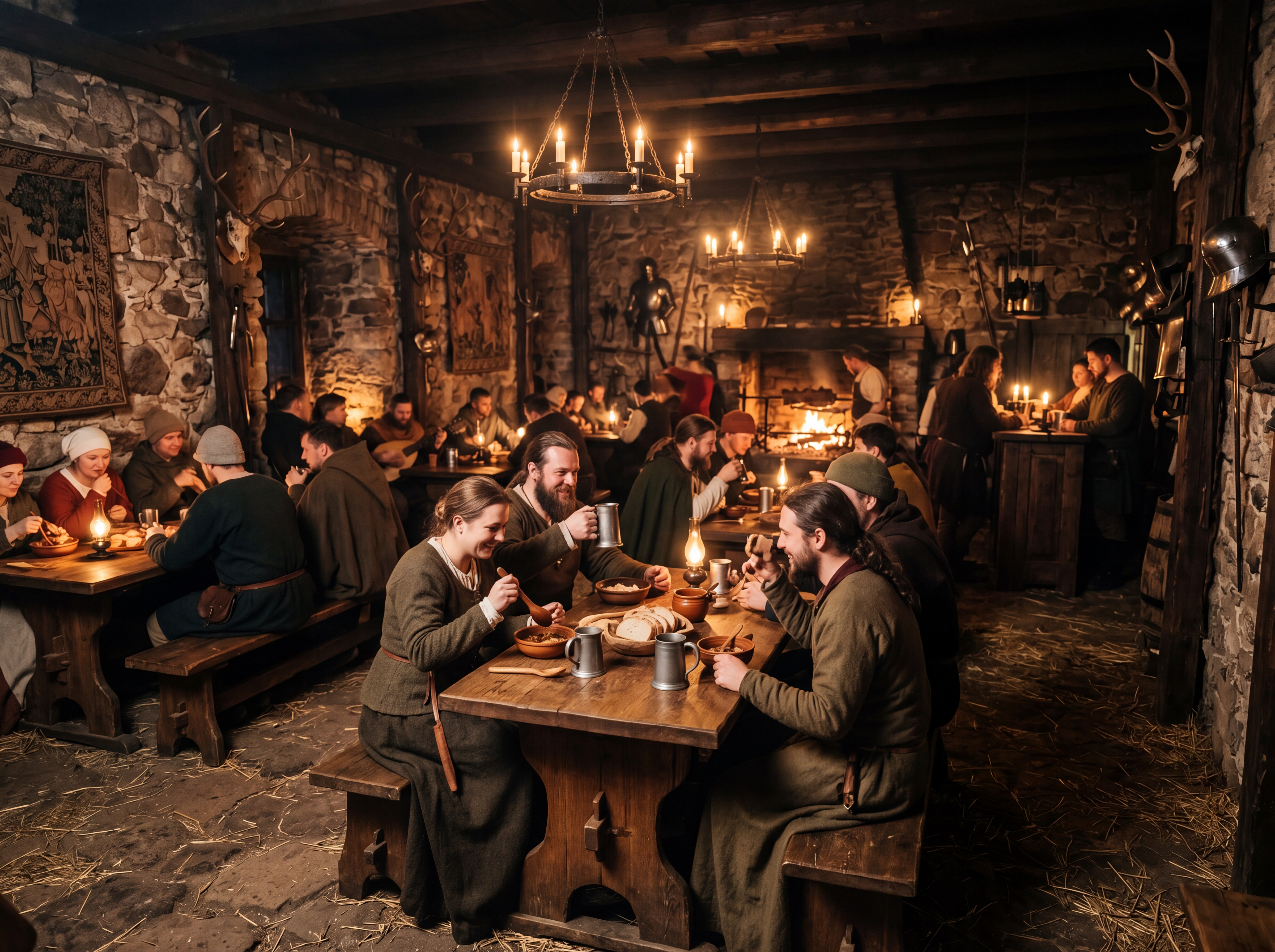
In the medieval era, the tavern—or "smuklė"—was far more than a place to eat; it was the social anchor of the community. For the weary traveler, the local merchant, or the castle guard, the tavern offered a sanctuary of light and heat against the biting Lithuanian winter. Inside these great stone halls, the air was thick with the smell of roasting fat and the sweet, fermented scent of mead. The architecture itself reflected the strength of the era, with massive stone arches and vaulted ceilings that amplified the boisterous laughter and the rhythmic strumming of lutes and pipes.
A typical feast in a Vilnius tavern was a spectacle of abundance. Long wooden tables groaned under the weight of communal platters. As depicted in the scenes of the time, these gatherings were vibrant and inclusive. Men and women in heavy wool tunics and linen headcoverings sat shoulder-to-shoulder, raising pewter tankards in toasts that bridged social divides. The centerpiece of such a feast was often a whole roasted suckling pig, its skin crackled to a golden brown, surrounded by roasted poultry and bowls of hearty grains. The flickering light from wrought-iron chandeliers and wall-mounted candles cast long shadows, dancing across the heraldic banners that adorned the walls, reminding every diner of the noble lineages that protected the land. Here, the "midus" (honey mead) flowed freely, a drink of the gods that had been fermented in Lithuania since pagan times, providing a sweet, intoxicating warmth that fueled stories of hunts and battles long into the night.
Staples of the Table: Grain and Gristle
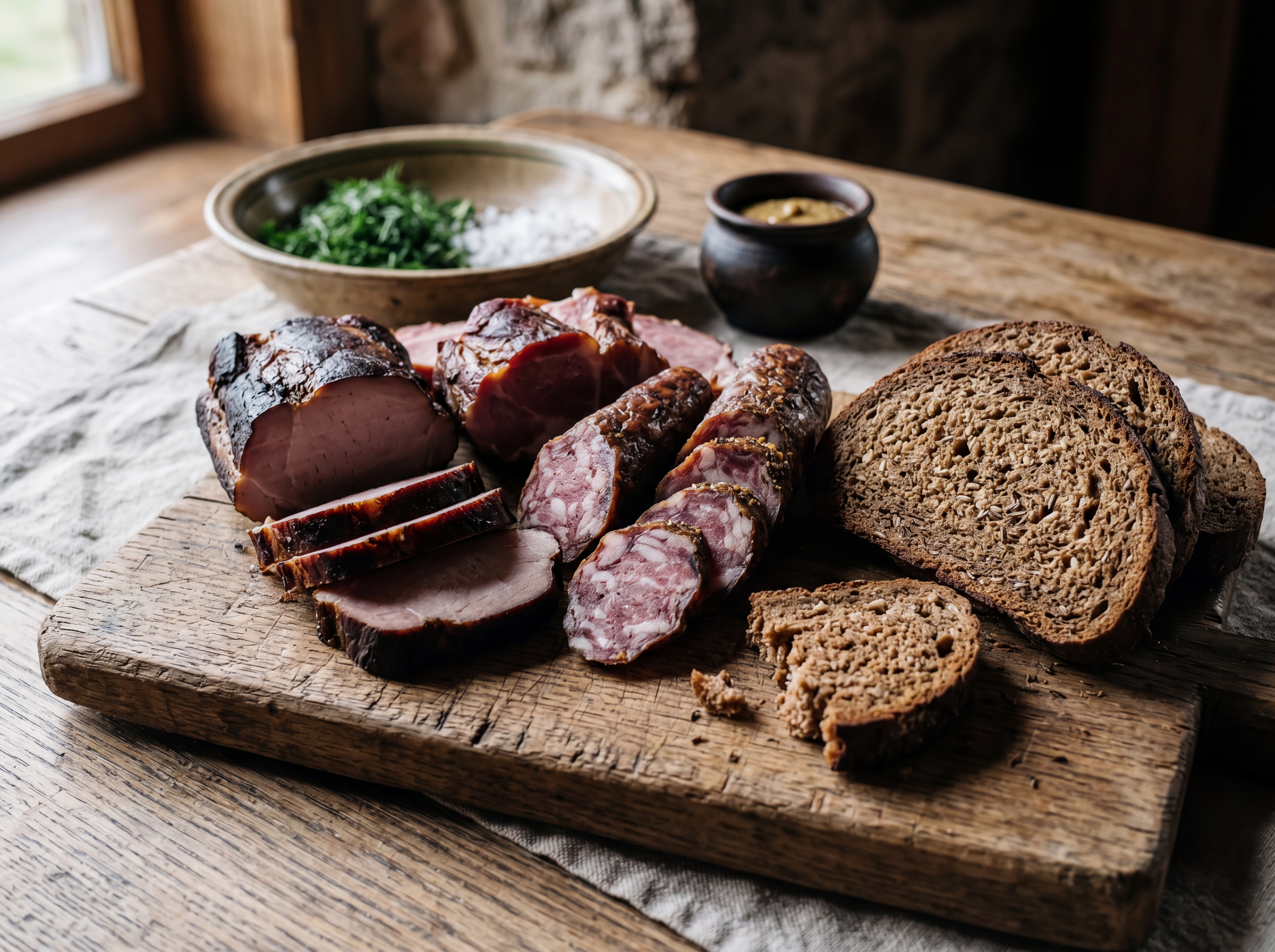
While the grand feasts of the nobility captured the imagination, the daily diet of the Vilnius citizen was built upon the "black gold" of the North: rye bread. In Lithuania, bread was—and remains—sacred. The medieval "juoda duona" (dark rye bread) was a dense, sour, and incredibly hearty staple, often fermented for days and baked in large loaves that could last for weeks. It was the foundation of every meal, used not just for sustenance but as a "trencher" or edible plate for other foods. The texture was coarse, filled with the grit of the stone mill, yet it possessed a deep, earthy flavor that paired perfectly with the preserved meats of the region.
Survival in the Grand Duchy required mastery of food preservation. Without refrigeration, the people of Vilnius turned to salt, smoke, and fermentation. A close look at a medieval larder would reveal a rich array of smoked hams, dried sausages, and "skilandis"—a traditional Lithuanian meat product made of pork stomach stuffed with minced meat and garlic, then cold-smoked over alder wood. On a rustic wooden board, one might find thick slices of salt-cured pork fat (lašiniai), which provided the necessary calories for physical labor in the cold. These savory meats were often accompanied by a sharp, pungent mustard and bowls of fresh forest herbs or wild greens like sorrel and dill. This was a cuisine of necessity turned into an art form; the smokiness of the meat, the acidity of the rye, and the bite of the mustard created a flavor profile that was uniquely Baltic—bold, resilient, and deeply satisfying.
The Heart of Trade: The Town Square Market
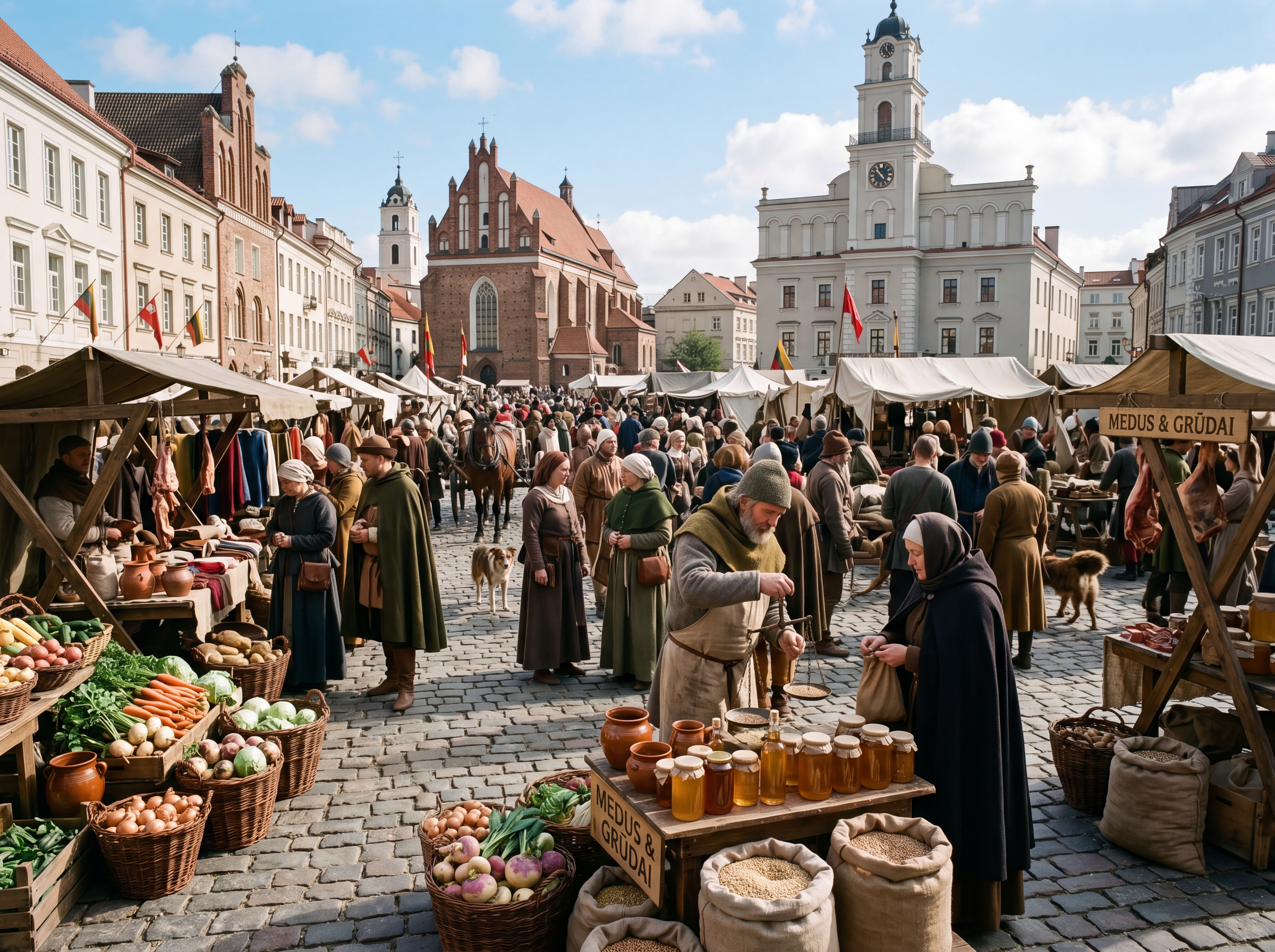
The culinary diversity of Vilnius was most evident in the Town Hall Square, the epicenter of trade and commerce. As a key stop on the trade routes between the Hanseatic League cities and the East, the Vilnius market was a sensory explosion. Here, the local peasantry met with international merchants to exchange the fruits of the Lithuanian soil for the luxuries of the wider world. The square was a forest of canvas tents and wooden stalls, where the language of commerce bypassed linguistic barriers. The cobblestones rang with the sound of bartering, while the Town Hall clock tower stood as a silent witness to the city's growing prosperity.
At the market stalls, the primary treasures were "Medus & Grūdai"—honey and grains. Honey was the primary sweetener of the medieval world, and Lithuanian honey, harvested from wild forest bees, was prized across Europe for its purity and floral notes. Large ceramic jars filled with golden nectar sat alongside heavy sacks of barley, buckwheat, and rye. Peasants in earth-toned cloaks would weigh out portions of grain using iron scales, while others sold baskets overflowing with the "earth apples" of the time—turnips, radishes, and onions. Cabbages and carrots added splashes of color to the stalls, destined to be fermented into sauerkraut or slow-cooked in clay pots. The market was also where one could find the influence of the city's diverse population; Jewish traders brought spices, while German craftsmen offered refined flours. This vibrant exchange ensured that the flavors of Vilnius were never static, but always evolving with every caravan that passed through the city gates.
Conclusion: Bringing the Past to the Present
The medieval flavors of Vilnius have not vanished; they have merely matured. Today, if you step into a traditional Lithuanian restaurant in the Old Town, you are tasting a direct lineage of the 14th century. The dark rye bread is still baked with the same reverence, the "skilandis" still carries the scent of alder smoke, and the mead still warms the soul just as it did for the knights of Gediminas. The culinary journey through medieval Vilnius reveals a people who were deeply connected to their land, their forests, and their community.
By exploring these historical foodways, we gain a deeper appreciation for the resilience and creativity of our ancestors. They took the simple gifts of the earth—grain, honey, and meat—and forged a culinary identity that has survived centuries of occupation and change. As we sit at a modern table in this ancient city, we are not just eating a meal; we are participating in a timeless ritual, a delicious continuity that links the vibrant, bustling Vilnius of today with the legendary, smoke-filled halls of its medieval past.